ref. Tres P - Prudencio Saez
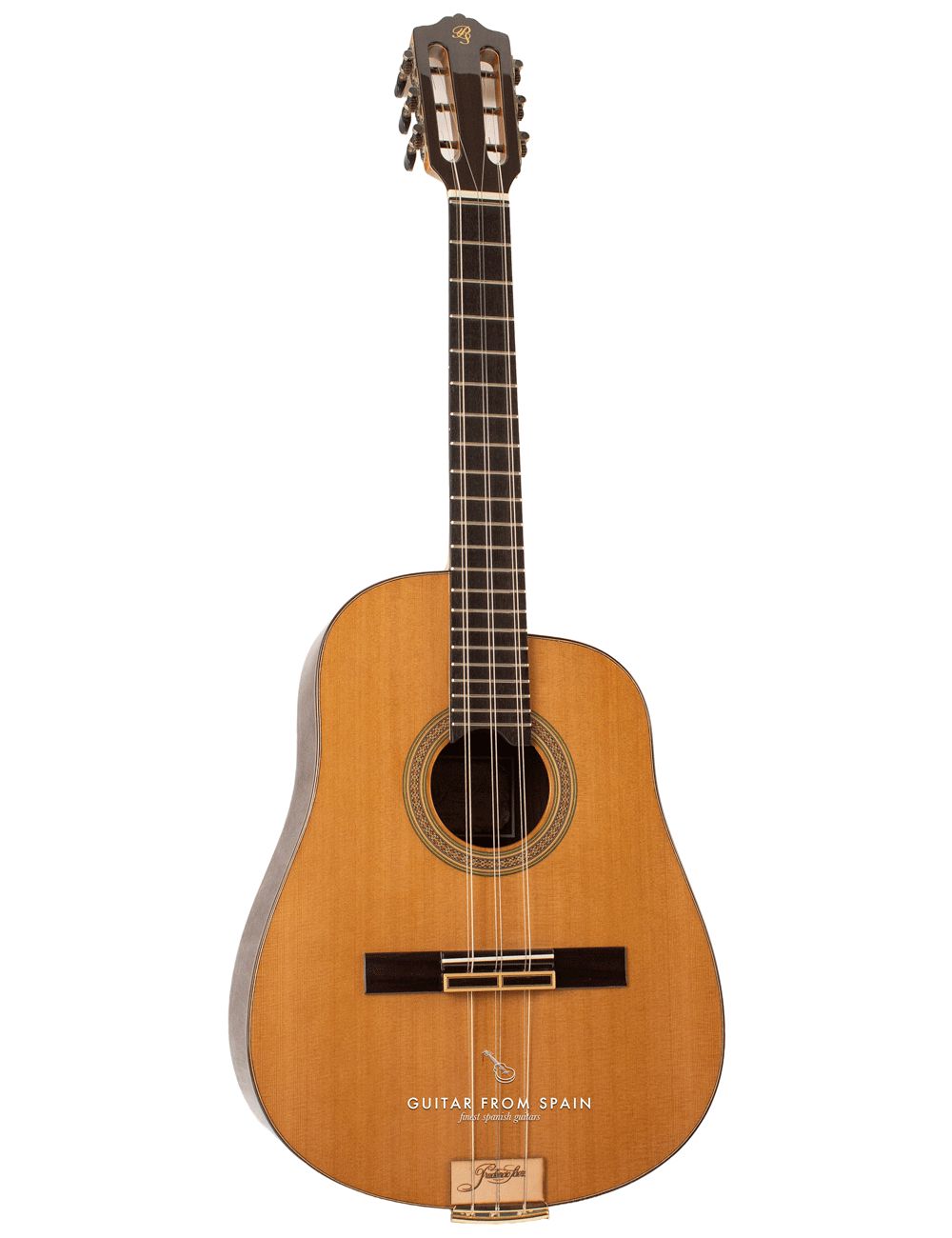
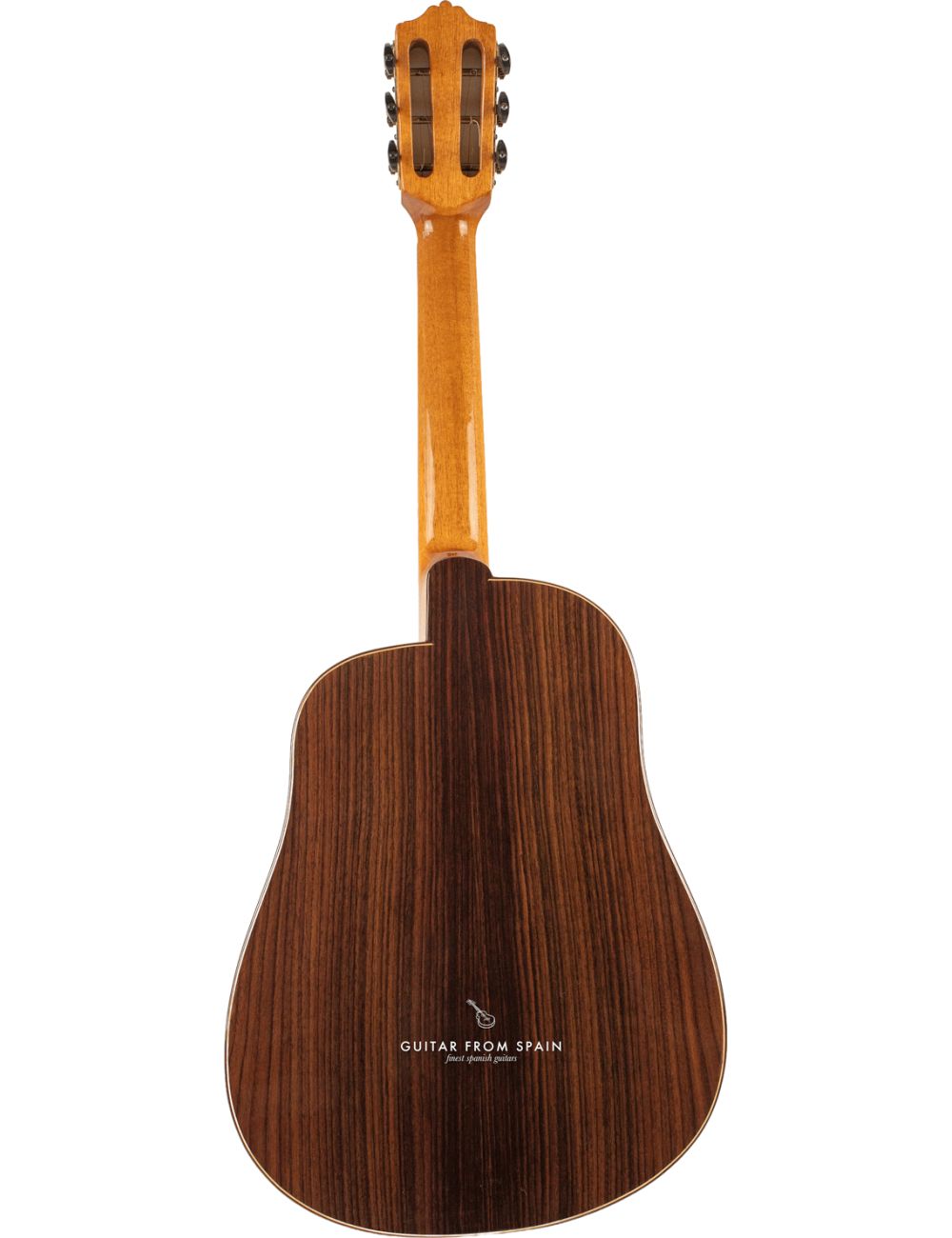
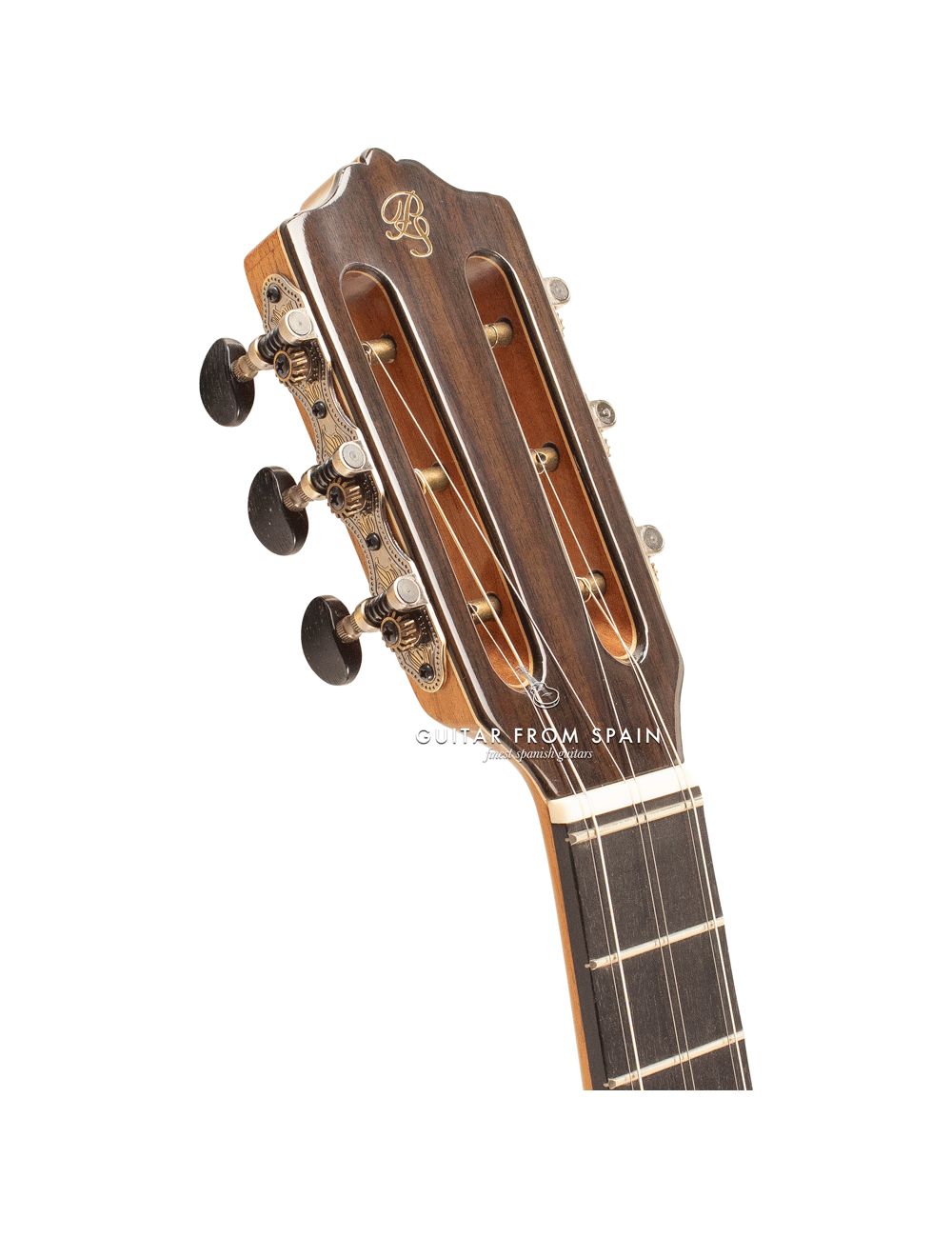
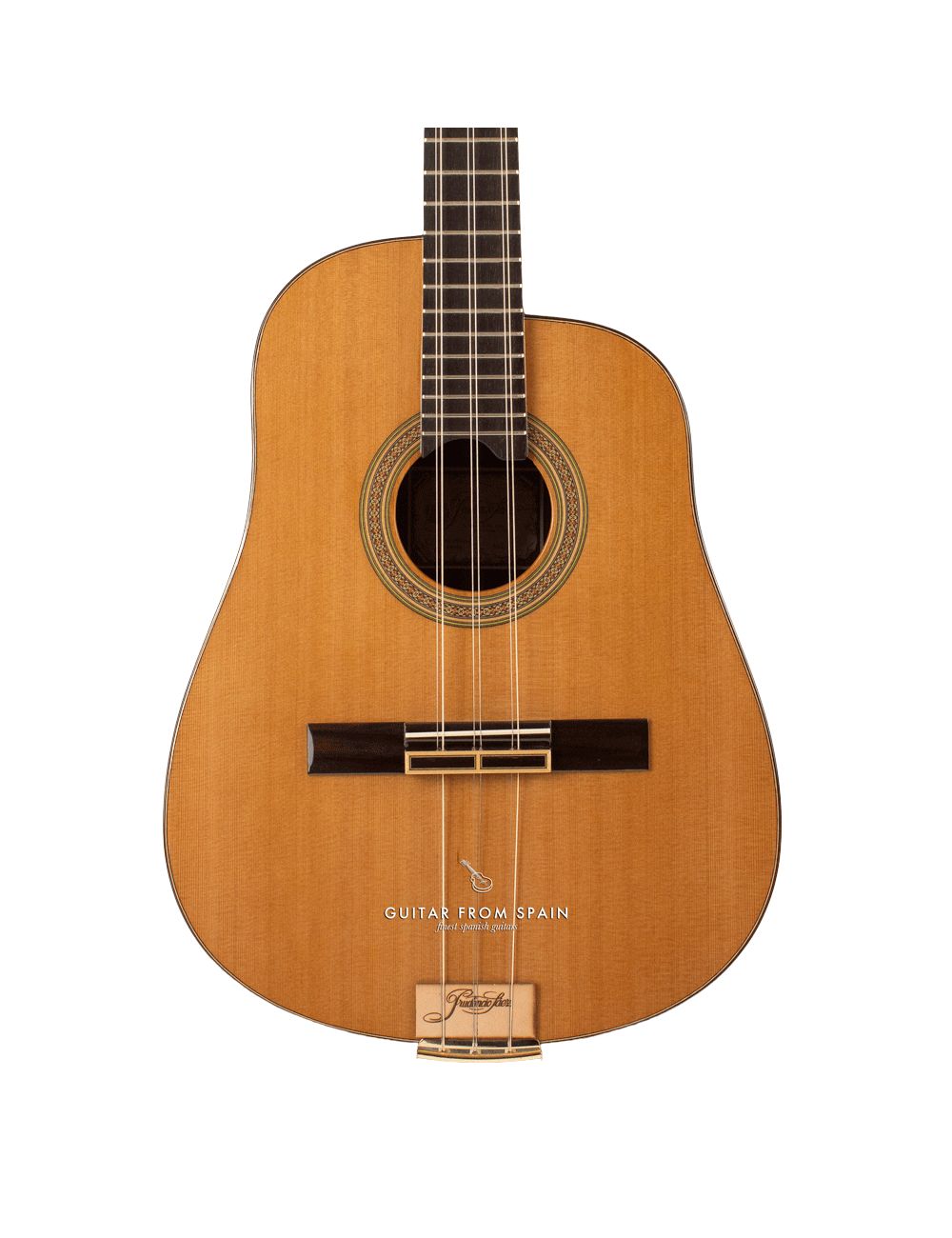
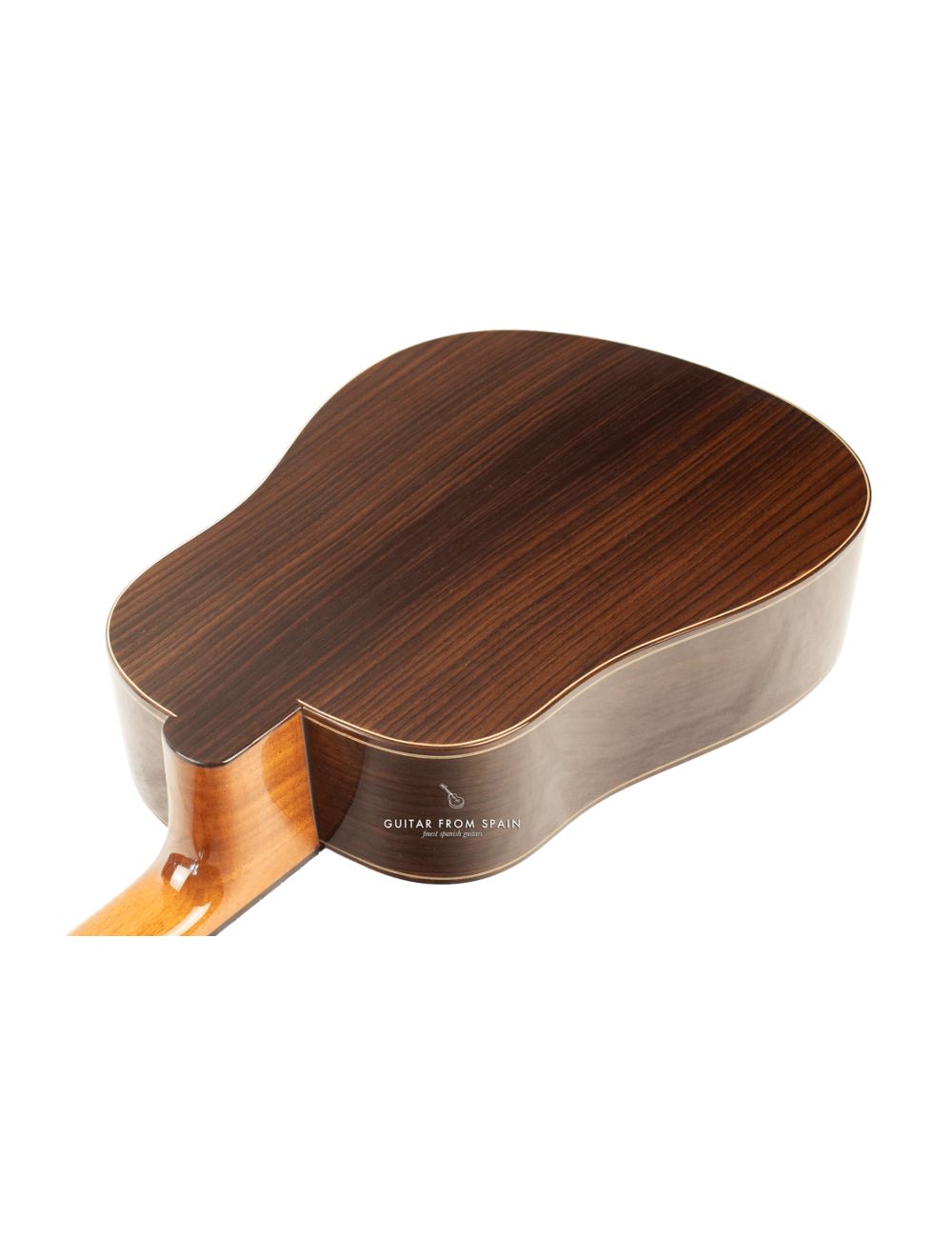
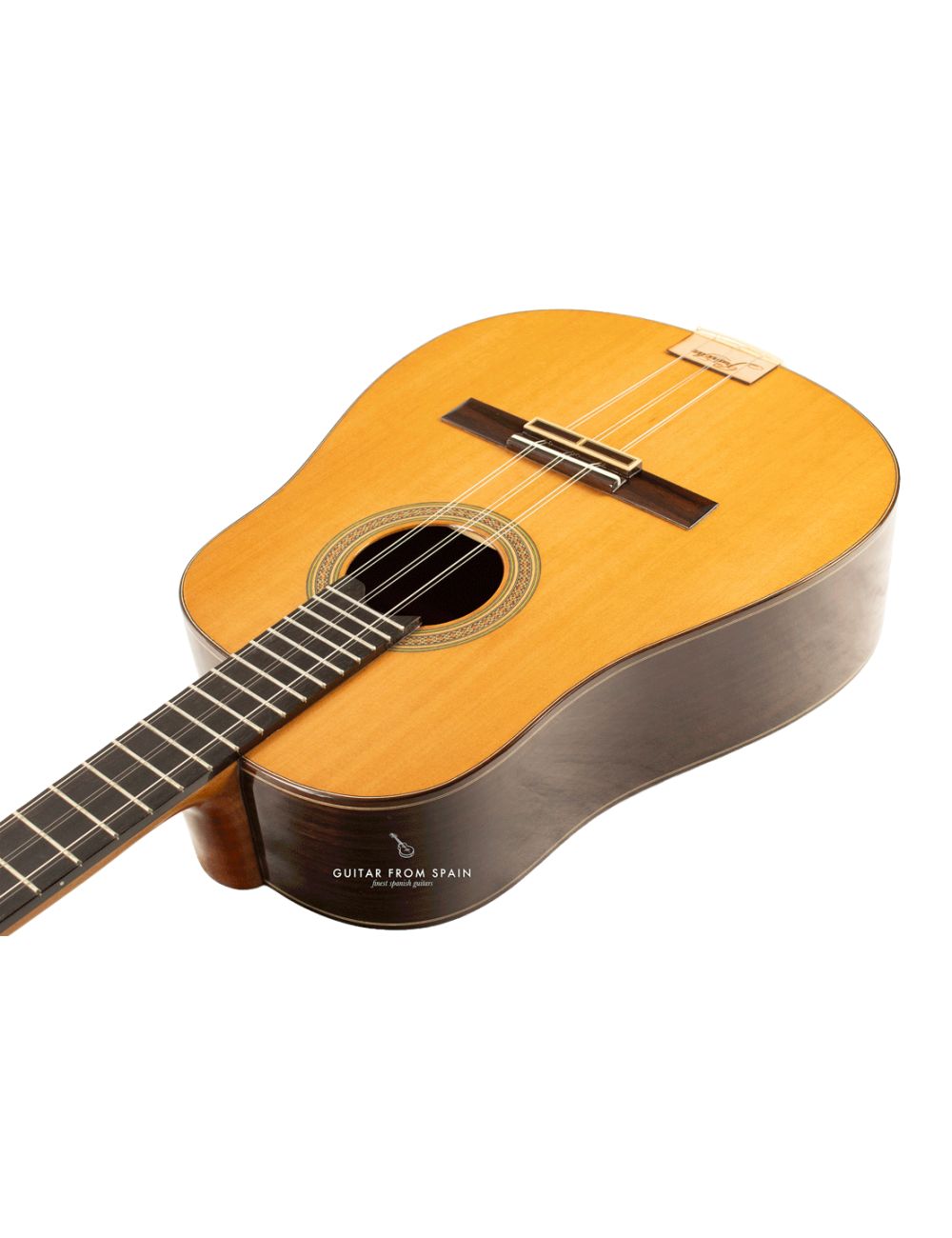
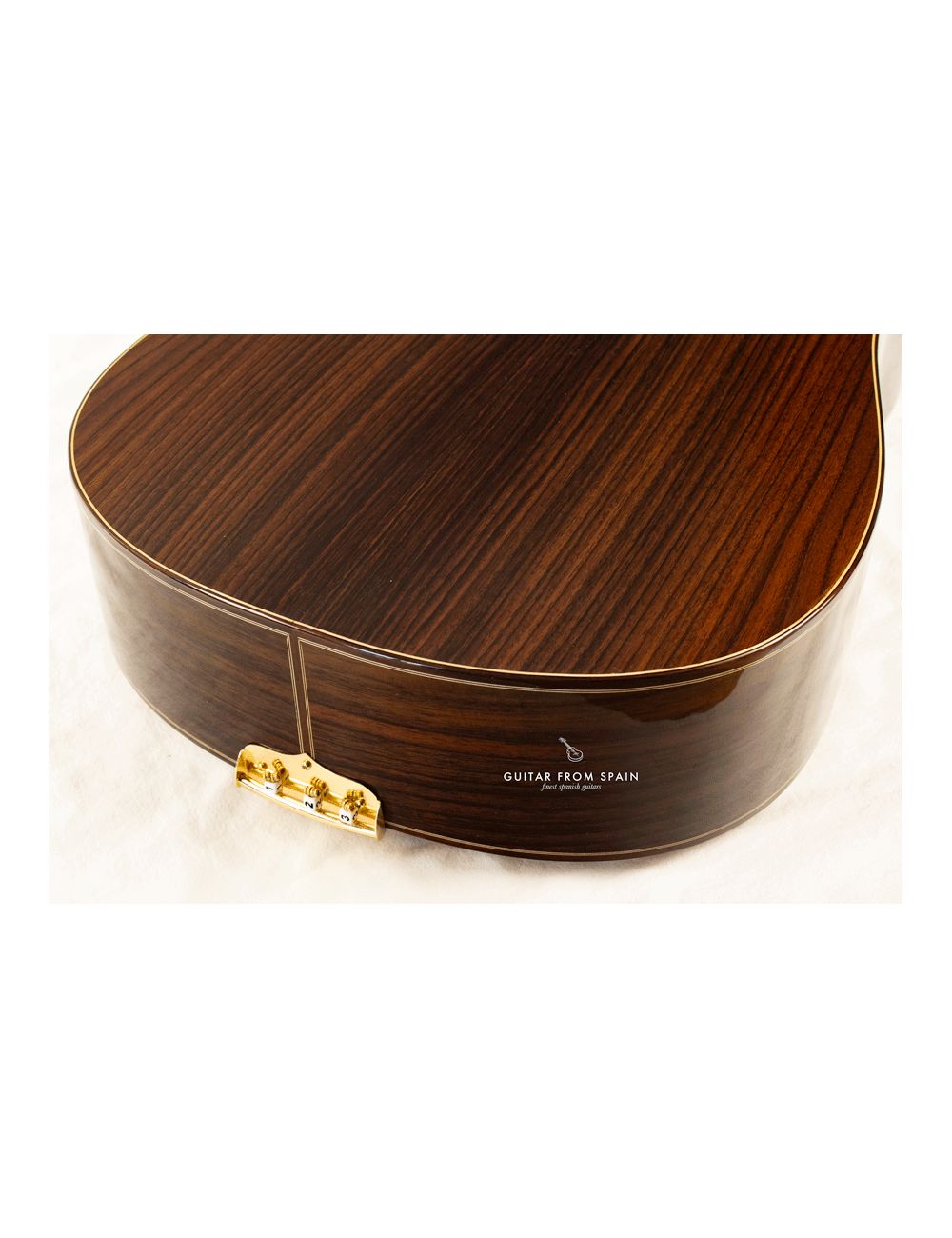
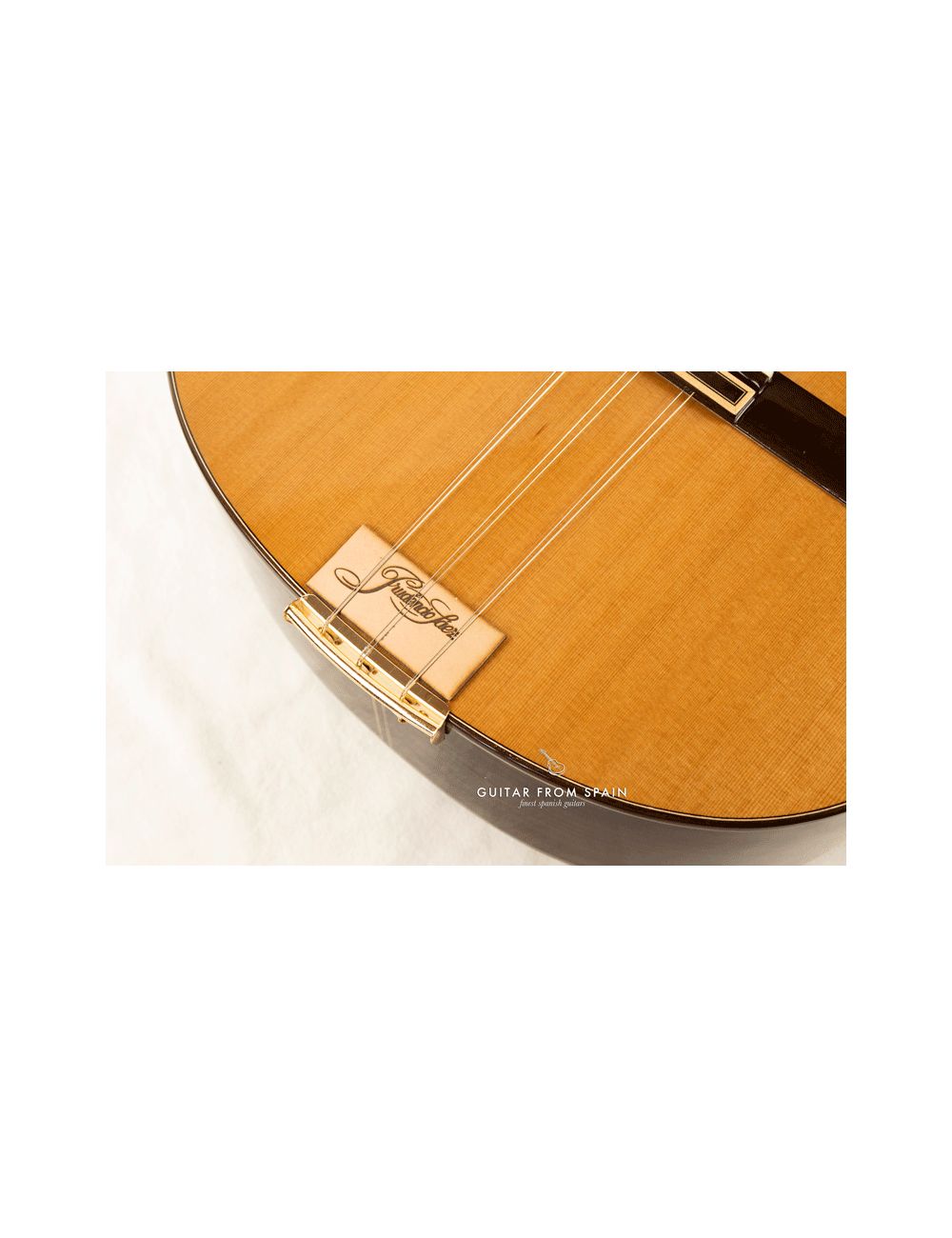
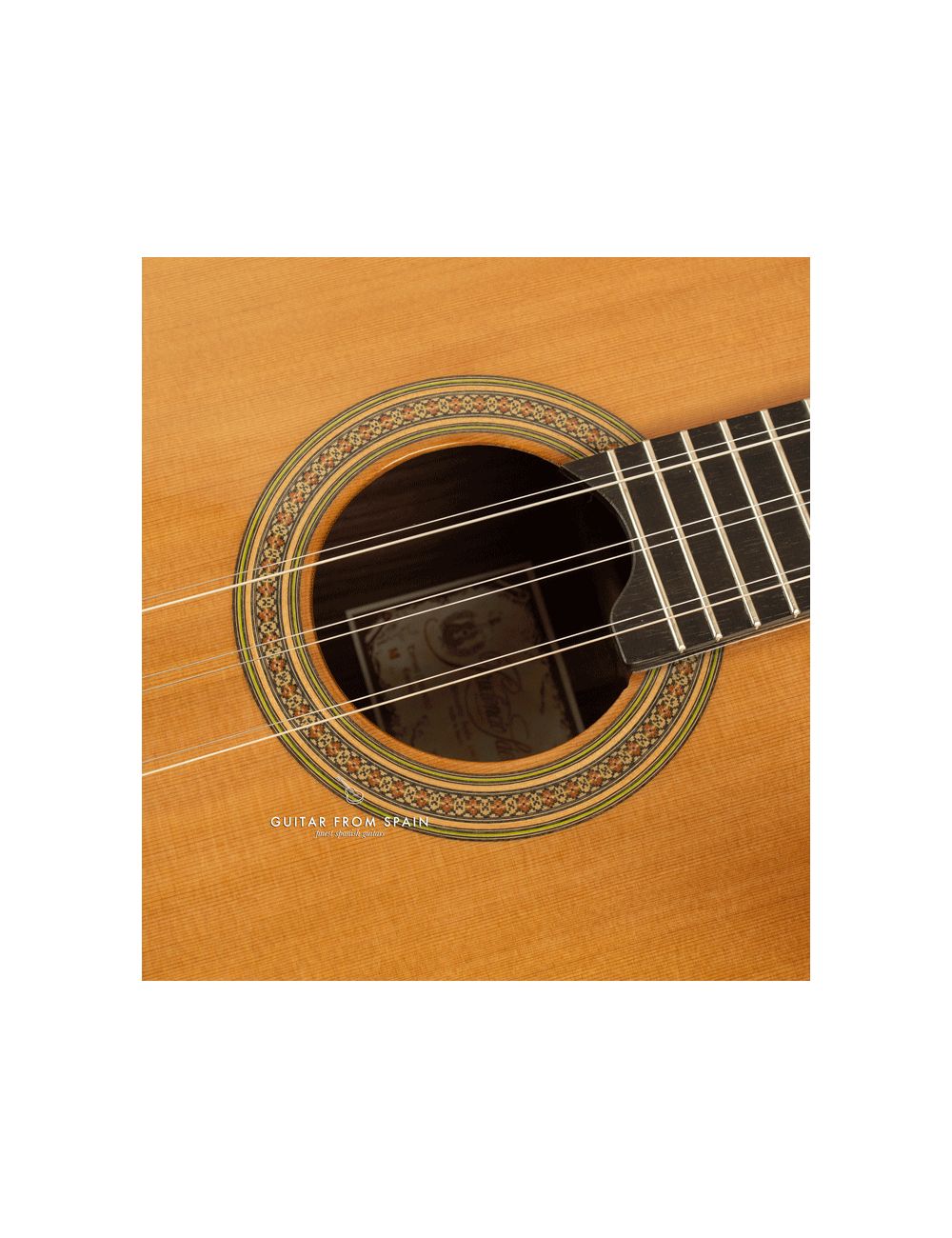
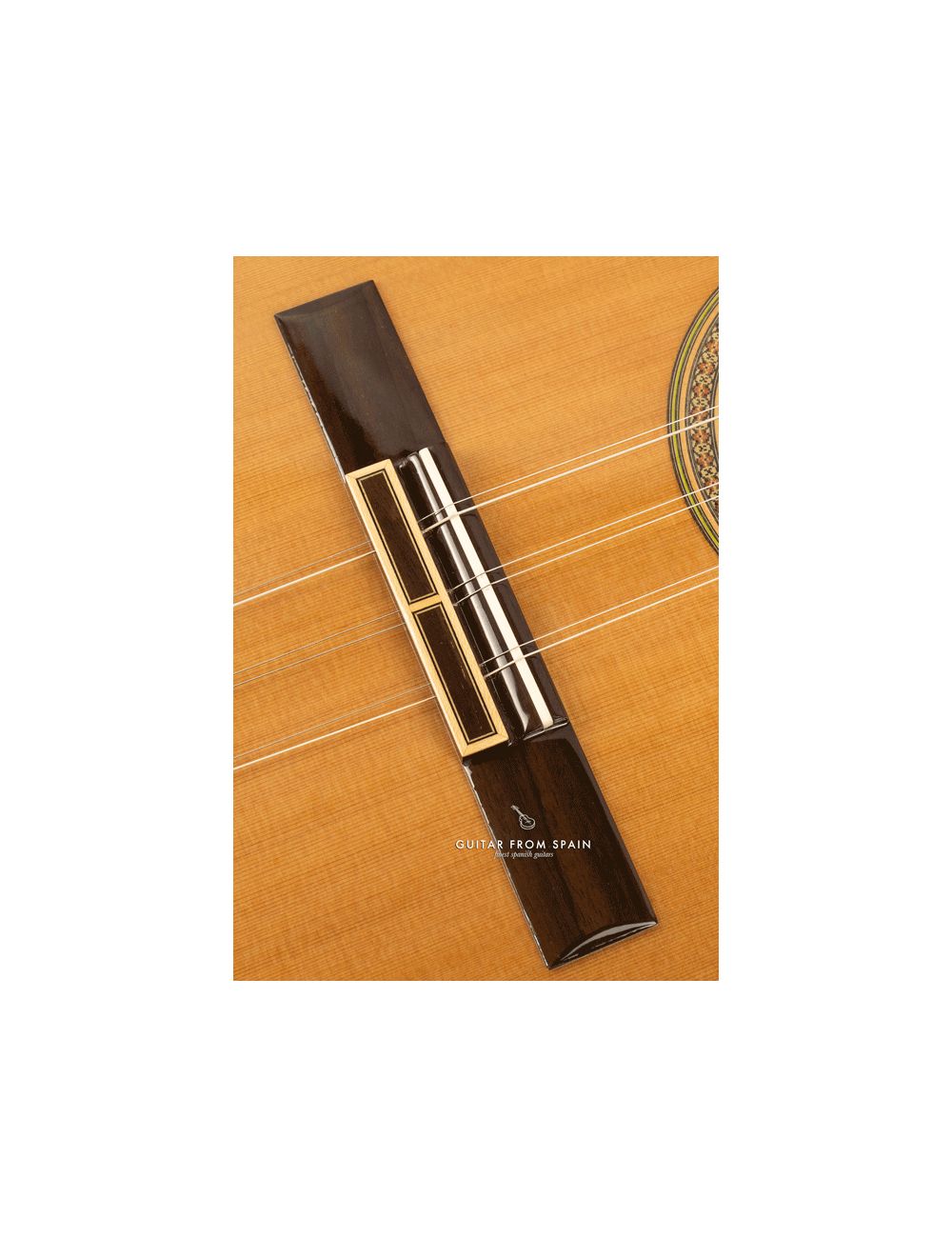
The Prudencio Saez Tres P Cubano is a Cuban Tres made in the Cuban tradition with the expertise and great craftsmanship of the master Spanish luthiers at the Prudencio Saez workshop in Valencia. The Tres P Cubano is a Cuban Tres made with solid cedar top and cutaway body. Incorporates a stunning rosewood body, ebony fingerboard, cedar neck and rosewood bridge. The Cuban tres has three courses (groups) of two strings each, making a total of six strings. From the low pitch to the highest, the principal tuning of the Cuban Tres is in one of two variants in C Major, either: G4 G3, C4 C4, E4 E4 (top course in unisons), or more traditionally: G4 G3, C4 C4, E3 E4 (top course in octaves).

Made in spain

Hand Made

Quality control
The Prudencio Saez Tres P Cubano is a Cuban Tres made in the Cuban tradition with the expertise and great craftsmanship of the master Spanish luthiers at the Prudencio Saez workshop in Valencia. The Tres P Cubano is a Cuban Tres made with solid cedar top and cutaway body. Incorporates a stunning rosewood body, ebony fingerboard, cedar neck and rosewood bridge. The Cuban tres has three courses (groups) of two strings each, making a total of six strings. From the low pitch to the highest, the principal tuning of the Cuban Tres is in one of two variants in C Major, either: G4 G3, C4 C4, E4 E4 (top course in unisons), or more traditionally: G4 G3, C4 C4, E3 E4 (top course in octaves).
Technical sheet:
Product Details
Specific References
The Timple Canario APC TIM307 is manufactured in Portugal following the strictest tradition of the Canarian Timple. Made from high-quality wood and with a solid top, the Timple APC TIM307 features a solid spruce top, sapele body, wooden pickguard and mechanical tuning pegs. The timple is a plucked string instrument with five strings that is typical of and originates from the Canary Islands. The timple is small in size, measuring approximately 38-40 centimetres. They generally have five strings, although in some cases they have four strings. The body is narrow and curved at the bottom, and this curvature is called a hump. The tuning of the timple can vary depending on what it is used for and who is playing it, but the most commonly used tuning for the instrument is D, A, E, C, G.
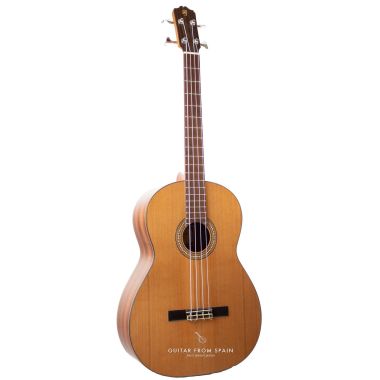
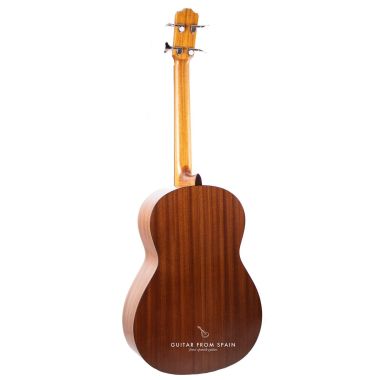
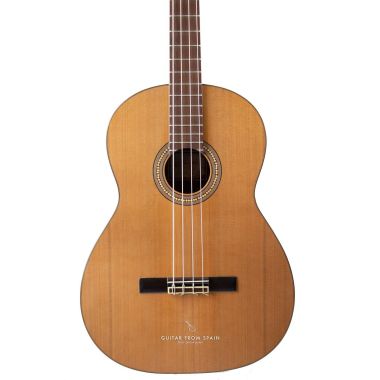
The Prudencio Saez B1 Acoustic Bass is a very special instrument. Unlike other acoustic basses on the market, the Prudencio Saez B1 is based on a Spanish guitar and its body is smaller and lighter than that of the average acoustic bass. Constructed using traditional Spanish guitar-making techniques, including a 'Spanish heel'. This acoustic bass has a full sound and tremendous sustain in a light, small-scale body. Made with quality solid woods including a solid sapelly body and solid spruce top. The neck has a truss rod inside it for greater stability and easy adjustment. Lovely matte finish enhances the natural tone of the wood.
The Abraham Luthier Sucre Charango is made following the strictest traditional methods of elaboration of this instrument. The craftsmanship and the sober and elegant design make this instrument a unique Charango. The Charango is a traditional stringed instrument from the Andes, especially popular in Bolivia, Peru, northern Argentina and Chile. The Charango Abraham Luthier Sucre has an Engelmann Spruce top, Vitacola sides and back, Mongoy bridge and fingerboard, Cedar neck with Vitacola headstock, decorative rosette and rosewood marquetry. Scale length is 370mm. An instrument of great quality both in craftsmanship and sound.
The Canarian Timple Abraham Luthier Maspalomas is manufactured using the strictest traditional methods of making this unique instrument. The Timple Abraham Luthier Maspalomas is specially suitable for learning, this timple offers great intonation and interpretive versatility. The craftsmanship and the sober and elegant design make this instrument a unique timple. The timple is a traditional Spanish plucked string instrument from the Canary Islands, used for playing the traditional folk music on this beautiful archipelago, just off the north-east coast of Africa. The timple has the compact dimensions of approximately 100 cm (38-40 inches). They are usually made with five strings, like the Abraham Luthier Maspalomas, although some models are also made with four strings. The body is narrow and curved at the bottom, which is called a 'hump'. For this reason, the timple is also affectionately known as a camellito, or 'little camel'. Timple tuning may vary depending on the interpreter, but the most-commonly used tuning is GCEAD.
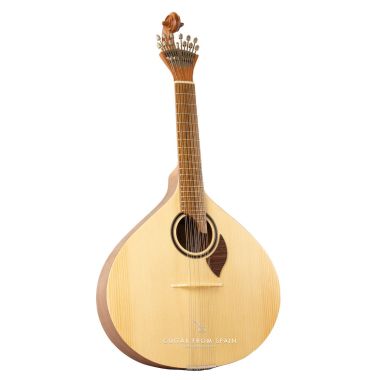
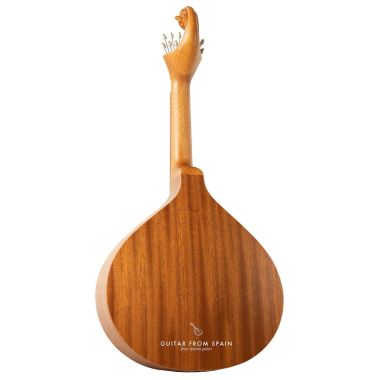
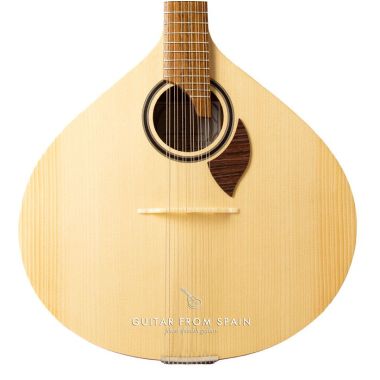
The Portuguese guitar or fado guitar is a stringed musical instrument that evolved in the 18th century and descendent of the citole. The APC 305-LS is a fado guitar made in Portugal with a solid spruce top, sapelli back and sides, and a volute or snail-shaped headstock, typical of Portuguese guitars from Lisbon. The APC 305-LS Portuguese guitar has 6 pairs of strings with the following tuning: aa, gg, DD, Aa, Gg, Cc. Its beautiful headstock gives it a great personality and presence. Its neck width is 45mm and its scale length is 470mm. It has an open-pore finish and understated natural beauty.
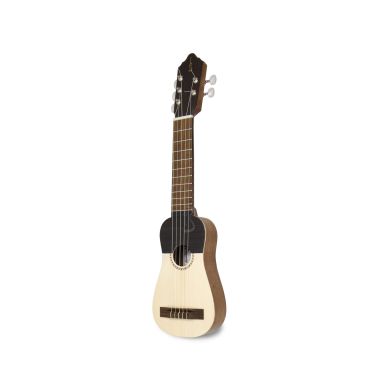
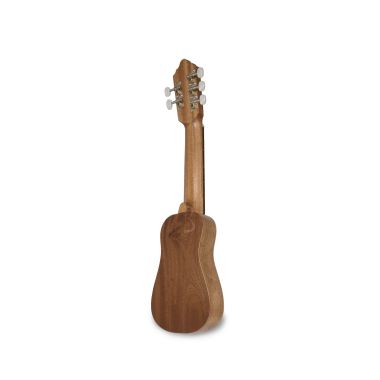
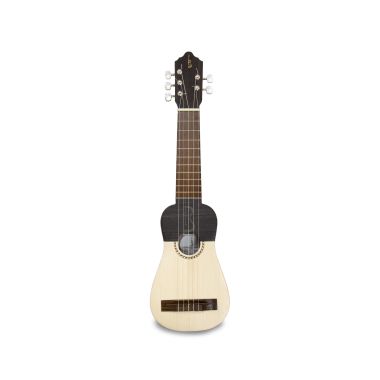
The Guitarlele APC GS It is an instrument halfway between an ukulele and a guitar. It is manufactured using traditional methods of guitar making. The Guitarlele APC GS is made with a solid Koa top, solid Koa body, a natural open pore finish and has a scale length of 445 mm. The most-commonly used tuning is A, E, C, G, D, A.
The Prudencio Saez Tres P Cubano is a Cuban Tres made in the Cuban tradition with the expertise and great craftsmanship of the master Spanish luthiers at the Prudencio Saez workshop in Valencia. The Tres P Cubano is a Cuban Tres made with solid cedar top and cutaway body. Incorporates a stunning rosewood body, ebony fingerboard, cedar neck and rosewood bridge. The Cuban tres has three courses (groups) of two strings each, making a total of six strings. From the low pitch to the highest, the principal tuning of the Cuban Tres is in one of two variants in C Major, either: G4 G3, C4 C4, E4 E4 (top course in unisons), or more traditionally: G4 G3, C4 C4, E3 E4 (top course in octaves).